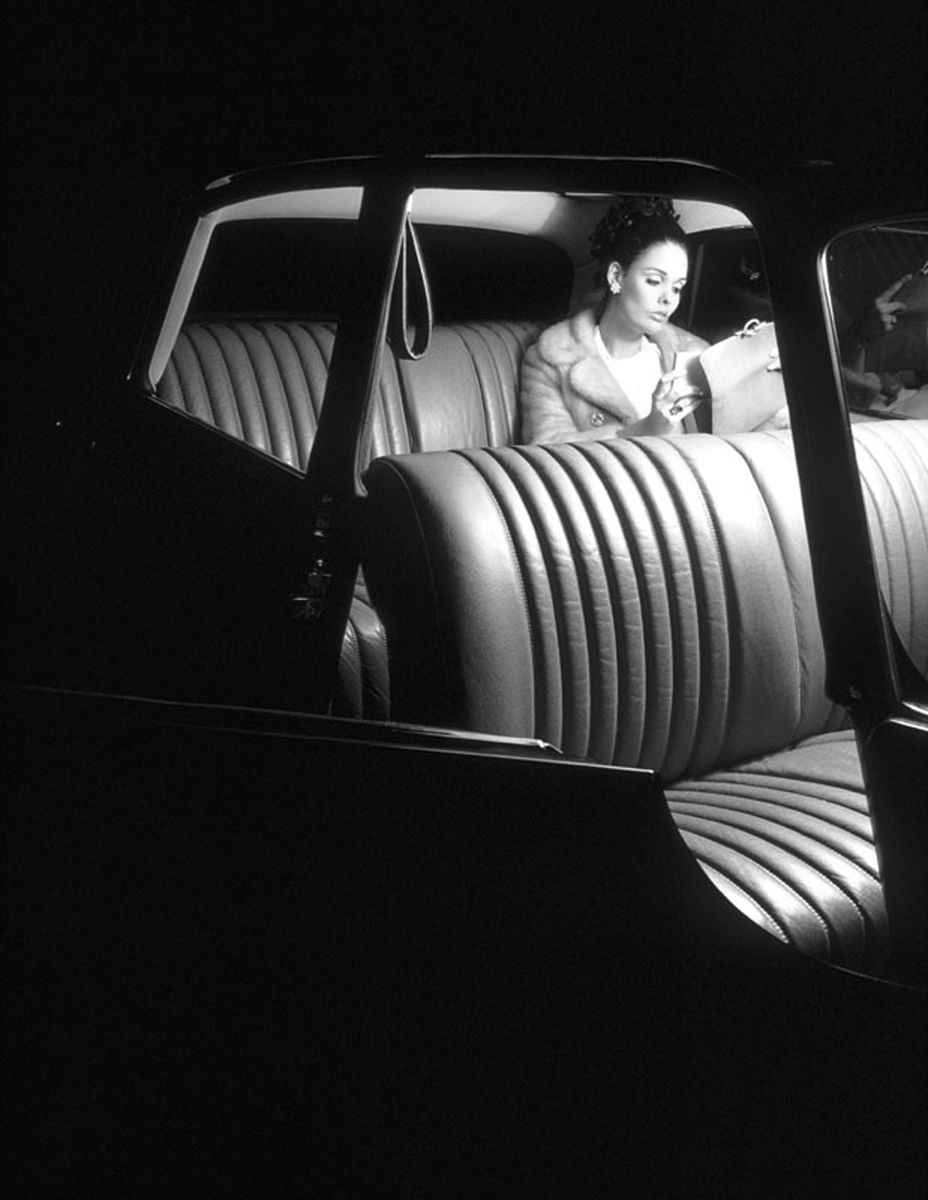
Comfort first and foremost: according to Lefebvre. He had said it already for the Traction Avant, which featured well-padded seats built on a tubular metal frame that was both light and strong. And he repeated it for the DS, even creating a dedicated working group to focus exclusively on this crucial aspect of the interior.
For the DS, a new material came into play: Dunlopillo, a special honeycomb rubber produced by Dunlop. The name itself was a fusion of Dunlop and pillow: soft and lightweight, it combined the softness of a synthetic sponge with the buoyancy of countless tiny air cushions. Dunlopillo was used for the side cushions of the rear seats, the seat upholstery—at first paired with metal springs, like in a mattress—as well as under the occupants’ elbows in the armrests, and even in the floor mats. There, it served as both acoustic and thermal insulation, surprising passengers who discovered they could sink several centimetres into the mats with the heels of their shoes. Comfort was absolute. As performance increased, so did the technical demands. The DS models, SM (Sport Maserati) inclusive, reached top speeds and these higher performances pushed Citroën to completely rethink the seating of its flagship model. In October 1968, prior to the electronic fuel injection for the DS and the forthcoming launch of the SM in early 1970, the seats underwent a radical redesign. The front seats—and the cushions of the rear seats—abandoned metal springs altogether in favor of a specially shaped block of Dunlopillo.
At first glance, this might have seemed the only change. In reality, much more had been achieved: the seat and backrest foam had varying densities, calibrated to absorb different levels of stress. The backrests grew taller, and the cushions more enveloping. Without sacrificing form or comfort, the designers endowed the DS with seats of remarkable effectiveness, whether upholstered in leather or fabric. The customer could also request a large, adjustable, and exceptionally soft headrest.
The DS adopted this new technology across all models until the end of its production and so did the SM. The latter combined Citroën’s renowned comfort with the touch of sportiness, essential to a coupé powered by a Maserati engine.