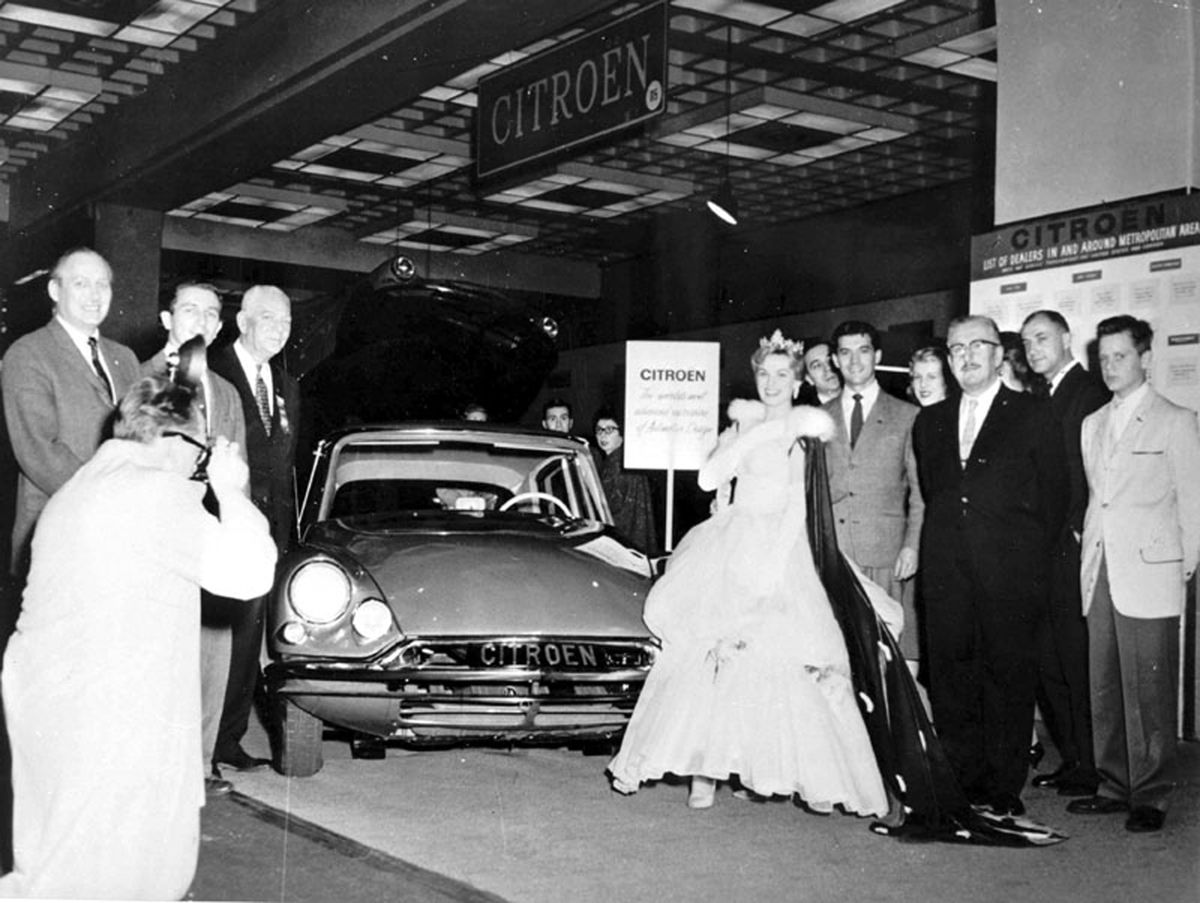
Grace Kelly, the Hollywood star who became Princess of Monaco, and the Citroën DS, an icon of French style, did not first cross paths at a gala or diplomatic event, but rather on the podium of the 1959 Monte Carlo Rally.
For the DS was more than just a symbol of elegance and innovation; it also proved itself as a sports car. As early as the 1920s, private drivers had entered their own Citroën cars in major international competitions, even without official backing from the manufacturer. This tradition took on new significance in the late 1950s, when non-professional but skilled drivers began entering the DS19 in some of the most demanding rallies. Their impressive results soon demonstrated that Citroën’s futuristic saloon was capable of excelling in competition as well as on the road.
After securing first place in the 2-litre category at Monte Carlo in 1956 and sweeping all three podium spots at the Finnish Rikspokalen the following year, the real turning point came in 1959. That year, Paul Coltelloni, together with Pierre Alexandre and Claude Desrosiers, driving an ID19 owned by Coltelloni’s wife, claimed overall victory at the 28th Monte Carlo Rally. On January 25th, the ID19, carrying race number 176, won the rally with 308 penalty points, finishing 22 points ahead of the Simca Aronde driven by Thomas-Dellière. Coltelloni, a shoemaker by trade, received the trophy from Princess Grace of Monaco. Thus began an epic chapter in automotive history.
Coltelloni competed for the P.I.F. (Paris–Île-de-France) team, managed by René Cotton. Following the 1959 Monte Carlo victory, the young Jacques Wolgensinger, who had been heading Citroën’s newly established Public Relations department for less than a year, approached Cotton with a proposal for collaboration. At the time, drivers competing in rallies were not professionals and often had other jobs: Coltelloni was a shoe salesman, while Bob Neyret was a dentist. Even today, Neyret enjoys recounting how, every evening after seeing his last patient, he would head to the street where his DS was parked and practise driving in the wooded areas around Paris. The DS’s record continued to grow with each race. Wherever the road was made treacherous by snow, ice, mud, or loose scree, the ID and DS handled it with remarkable agility. The combination of the DS’s advanced chassis and its front-engine, front-wheel-drive layout allowed the cars to maintain control even in the most slippery conditions.