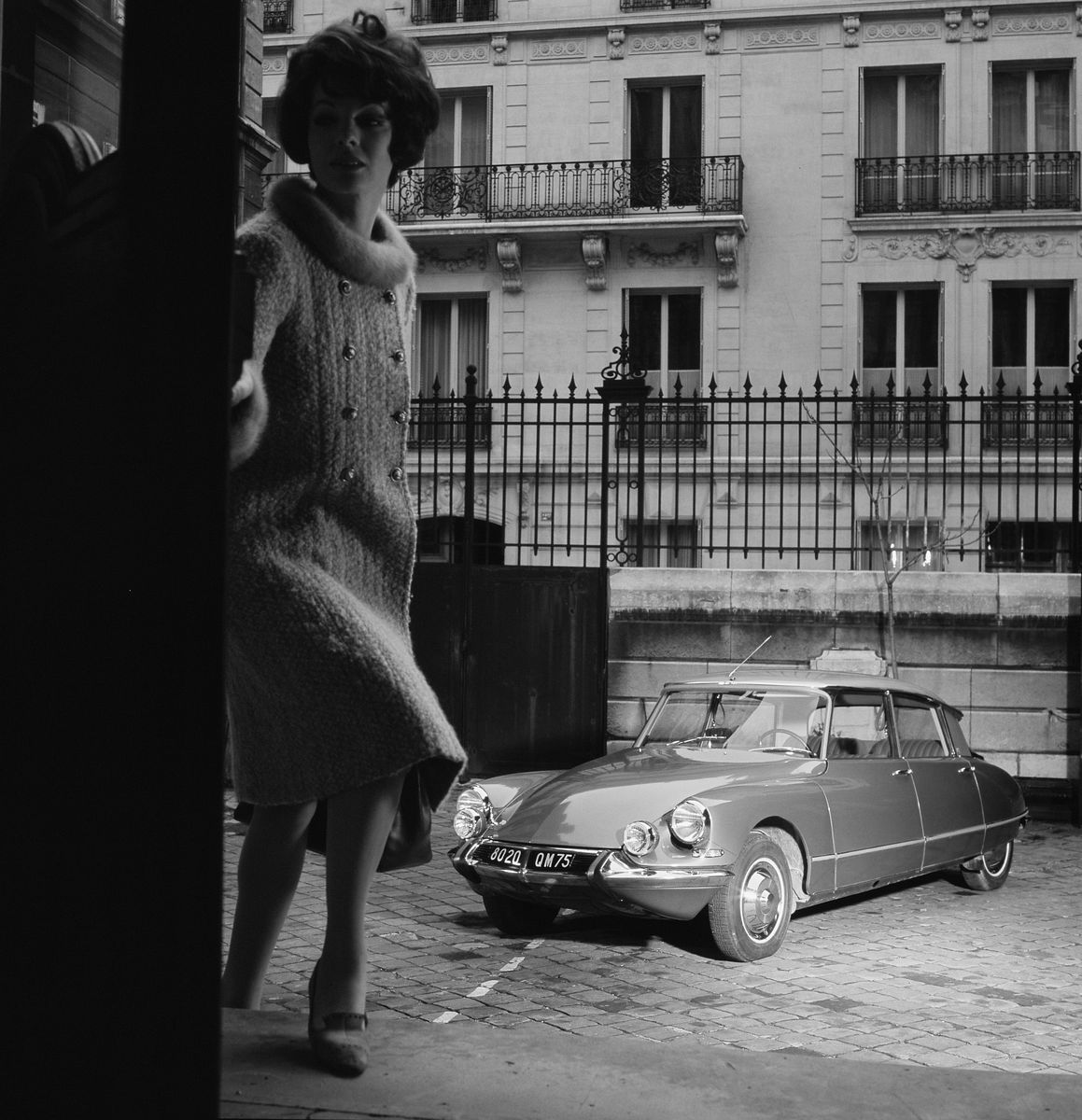
Young managers, dynamic company directors, famous journalists and anyone who enjoyed driving a luxury car on a daily basis had a car – usually British – designed for them. The DS19 had already been enjoying undoubted success among these types of customers for years: anyone who appreciated art and design could not remain indifferent to the unique and unmistakable charm of the Goddess of cars. In 1964, Citroën introduced the DS Pallas, clearly named after the Greek goddess Athena. Created for discerning customers who valued both avant-garde design and refined luxury, the Pallas combined the pure lines of the “Déesse” with distinctive details reminiscent of the prestige of British automobiles. Elegance and luxury made the Pallas the ideal way to emphasise one's status without showing off, to the point that in France the expression ‘c'est plus Pallas’ entered the slang of young people to indicate anything that was better or more elegant than something else. The DS Pallas was unveiled at the 1964 Paris Motor Show and its production continued until April 1975, with the last DS to roll off the assembly line at Quai de Javel being a DS23ie Pallas.
The Pallas finish was soon extended across the DS range, made available as an option—thus creating the Prestige Pallas—and offered as standard on all Cabriolets from 1965 until the end of production.
No ID models were officially given the Pallas treatment, with a single exception: a bespoke estate car, the Break de chasse, built for the Belgian royal family as a “Commande Spéciale,” one of several tailor-made DS commissions for heads of state and celebrities.
From its debut, the DS Pallas became the most sought-after version in the range. In Italy, Pallas even became synonymous with DS itself. By 1970, the DS20 (the most popular model on Italian roads) was offered exclusively in the Pallas version with hydraulic gearbox, bringing comfort to its highest expression.