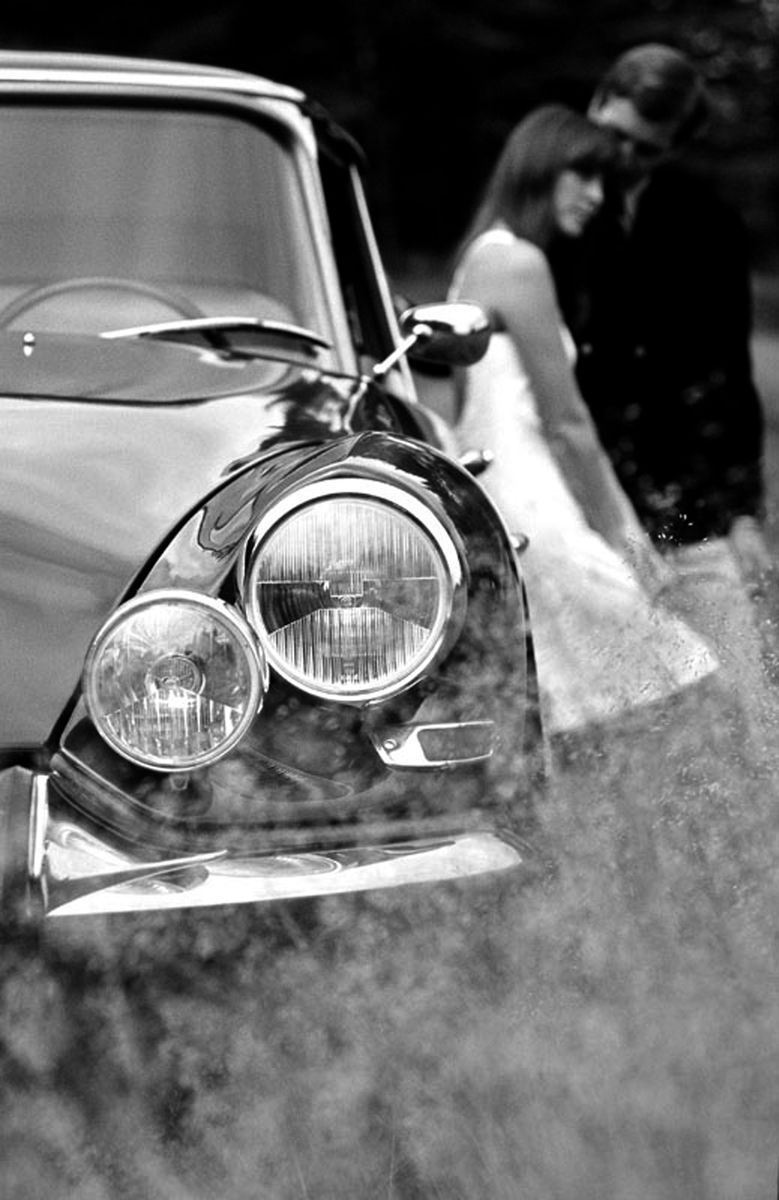
Born in Varese in 1903, Flaminio Bertoni was just twenty-two when, in April 1925, he showed André Citroën his patent for a “pneumatic window regulator for motor vehicles.” Despite his poor French, Bertoni was hired on the spot, beginning his career at Double Chevron. Alongside his work as a designer, Bertoni pursued his true passion: art. Painting was a pastime, but sculpting, especially capturing the forms of nature, which he revered as a Mother Goddess, was his calling. This deep love for natural forms would leave a lasting imprint on his iconic automotive designs. In June 1932, André Citroën tasked Flaminio Bertoni with modernizing the lines of his cars, which at the time were heavily influenced by the American style. Bertoni achieved the extraordinary almost overnight: in a single night, he sculpted (not merely drew) the iconic forms of the Traction Avant, which would prove remarkably aerodynamic in wind-tunnel tests. And it could not have been otherwise: Flaminio Bertoni declared in one of his rare interviews that the lines of the Traction were inspired by a swan in flight.
In 1948, Bertoni designed the smallest member of the Citroën family, the 2CV, and in 1955, he created his absolute masterpiece: the DS19. Inspired this time by the streamlined lines of a fish, he sculpted the iconic “Goddess of Cars,” which in 1957 received the Grand Prix Diploma for industrial art at the Eleventh Triennale in Milan. Literally with a hammer, Bertoni personally shaped the new front end of the DS: the famous “doppiofaro” or double headlights. Sadly, he passed away prematurely in 1964, at the age of 61, the same year the ultra-luxurious Pallas version was introduced. He never lived to see the restyled DS with its covered headlights, unveiled in September 1967.