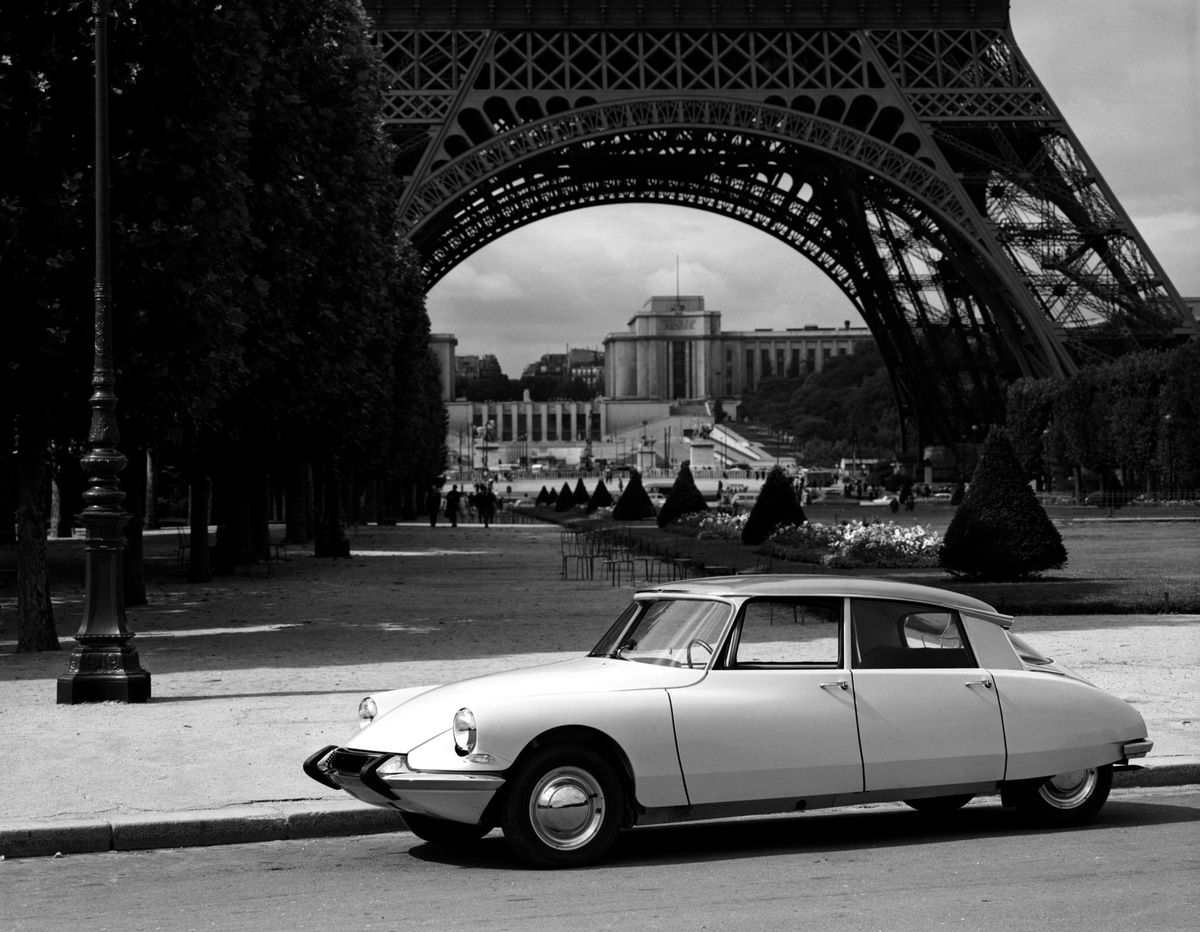
The Citroën DS is a car meticulously designed from an aerodynamic perspective. Viewed from above, its shape resembles a water droplet: wider at the front and gradually tapering toward the tail. The fairing is integral, covering the lower portion of the car as well as the rear wheels, which are enclosed within the fenders.
Airflow through the engine compartment was also carefully engineered. Designed to produce near-zero lift, the DS is nevertheless a rather large vehicle that could become difficult to control if its weight shifted significantly toward the rear. In such a case, air would be forced downward, turning the French sedan into a kind of wing and drastically reducing grip. This, however, cannot occur in the DS thanks to its extraordinary hydropneumatic suspension, standard on all versions of the model.
The system includes two ride-height correctors—one for the front axle and one for the rear—that compensate for load variations and keep the body perfectly level, regardless of weight distribution. Operating continuously, the suspension reacts within seconds to changes in load, ensuring the DS maintains its optimal aerodynamic profile, which in turn improves both speed and fuel efficiency.